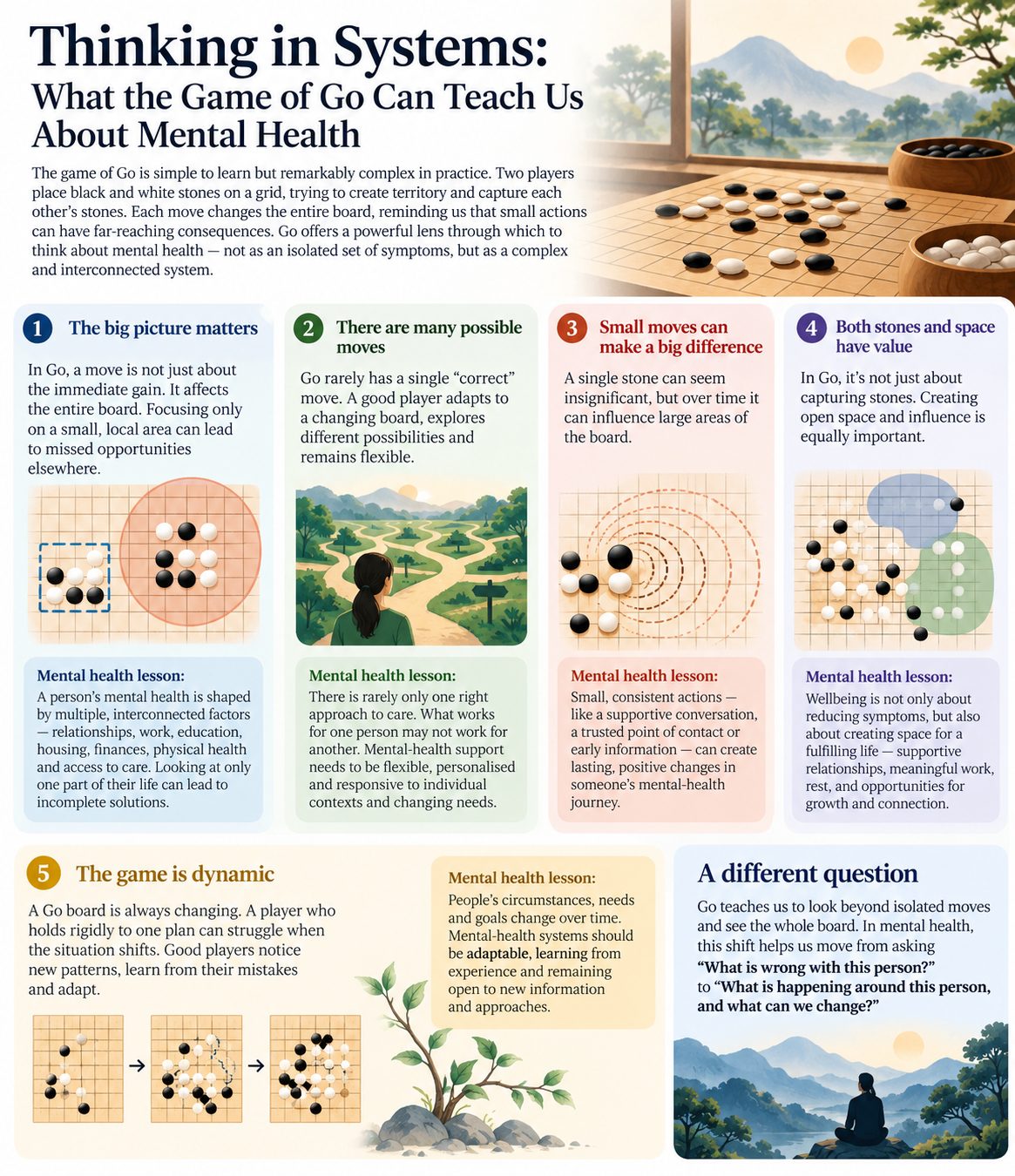
Five lessons
- The big picture matters. A move affects the whole board. A person's mental health is shaped by relationships, work, education, housing, money, physical health and access to care, so looking at one part of life gives incomplete answers.
- There are many possible moves. Go rarely has one correct move. Support needs to be flexible and personal, because what works for one person may not work for another.
- Small moves can make a big difference. A supportive conversation, a trusted contact or early information can create lasting change over time.
- Both stones and space have value. Wellbeing is not only fewer symptoms. It is also room for a fulfilling life: relationships, meaningful work, rest and connection.
- The game is dynamic. Circumstances and needs change, so systems should adapt and keep learning rather than hold rigidly to one plan.
A different question
Go teaches us to look beyond isolated moves and see the whole board. In mental health, this shifts us from asking “What is wrong with this person?” to “What is happening around this person, and what can we change?”